Wool comforters are crafted to balance warmth and breathability, leveraging natural fibers to regulate temperature across seasons. The inherent moisture wicking and insulating properties of wool help maintain a comfortable sleep environment, reducing overheating while providing cozy cushioning. This makes wool comforters a practical choice for those seeking year-round comfort in a bedding system.
Key characteristics of wool comforters include fiber loft, durability, and resilience. The crimp and elasticity of wool trap air, creating an insulating layer that remains lightweight. Additionally, resilient wool returns to shape after use, supporting longevity and consistent warmth without bulky weight, which is especially beneficial for transition periods between seasons.
When evaluating wool comforters, consider fill power, weave, and layering compatibility. A high-quality wool fill distributes evenly to prevent cold spots, while a breathable shell fabric enhances ventilation. Compatibility with other bedding—such as sheets and organic mattresses—supports a cohesive sleep system that aligns with sustainable and comfort-focused goals.
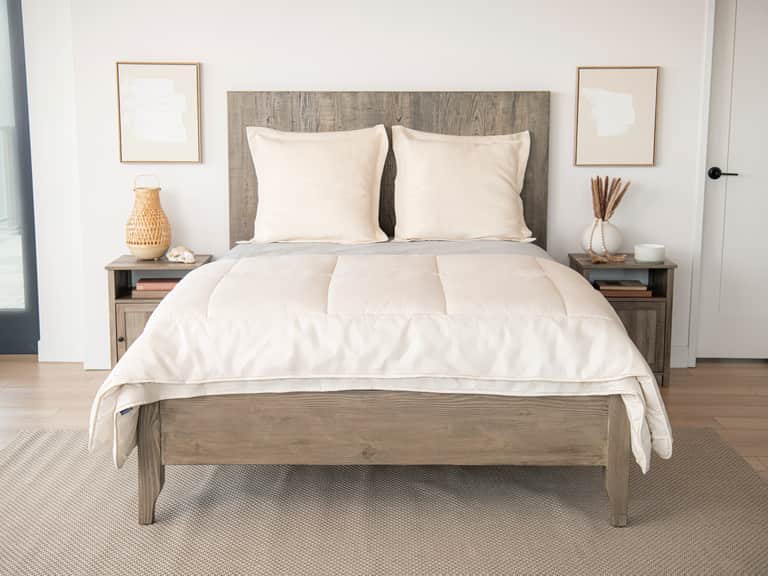
Natural wool options, such as the Naturepedic Alpaca Duvet Insert Comforter, blend luxury with practical features. This insert offers alpaca and wool fibers that contribute soft warmth, hypoallergenic properties, and moisture management. The result is a comforter that supports restful sleep by maintaining comfortable microclimates and reducing perspiration during the night.
In bedding ecosystems, wool comforters intersect with a broader range of products including organic mattresses and organic crib mattresses, alongside essential textiles like bedding and pillows. Understanding how wool interacts with temperature, humidity, and body heat can inform material choices for healthy sleep, ensuring comfort without compromising environmental and material safety considerations.
 Bedding